This Plane Was Never Going to Fly
Why the future of education isn't a better school.
There are times to iterate, and there are times to start over.
Almost every serious argument about American education assumes we are in the first situation. Smaller classes. Better curriculum. Higher pay. New standards, new assessments, new accountability. The whole conversation takes the basic shape of school as given and argues about how to tune it. Tweak the inputs, improve the outputs, iterate toward something that works.
I no longer believe we are in that situation. We are in the second one.
I keep coming back to one image. You would not blame the pilot for crashing a plane so riddled with design flaws it was never going to stay in the air. You would not study the pilot's technique, revise the pre-flight checklist, or add another gauge to the cockpit. You would look at the design, and you would start over. The people in the cockpit are doing extraordinary work under impossible conditions. But a plane that cannot stay in the air will crash, no matter who is flying it.
What we call "how school works" was never designed from what we know about how children actually learn. It is a hundred-year-old emergency response to chronic underfunding, built to turn a flood of immigrant children into a punctual factory workforce as cheaply as possible, and hardened over time into something we now mistake for the natural shape of education.
The arrangement where one adult holds thirty children at one pace through one sequence inside one box, while that same box is also asked to be clinic and cafeteria and counselor and rec center, is a failed design. It has never worked and it never will, and it should be abandoned. What children actually need, it was never shaped to give. And for the first time in a century, we can begin to see how to build its replacement. Not by putting children in front of screens all day, but by doing very nearly the opposite.
The plane was never built right
We know how children actually learn. We have known for a hundred years. The system reflects almost none of it.
None of what follows is contested in the field. It is not anecdote but decades of rigorous research, much of it replicated, argued over, and still standing after long peer review. It sits in every textbook and on every school-of-education wall, and we built the country's children a system that ignores almost all of it.
A child learns something only when it's at the right level for them, not so easy it's boring, not so hard it's hopeless. Vygotsky called that the zone of proximal development, and the zone is in a different place for every child.1 Cognitive scientists have spent the last half-century confirming the same thing from every direction. A child doesn't grasp that one-quarter is half of a half because a teacher says so. It clicks when the prerequisite knowledge is already in place, and the idea arrives in a form that means something to them: quarters of a football game, four pieces of a candy bar, the marks on a measuring cup.2 But that moment doesn't come for every child on the same day, week, or even year. A lesson aimed at the middle of the room is aimed at no one actually in it. Half the class is lost and the other half is bored, and we average the two and call it grade level.
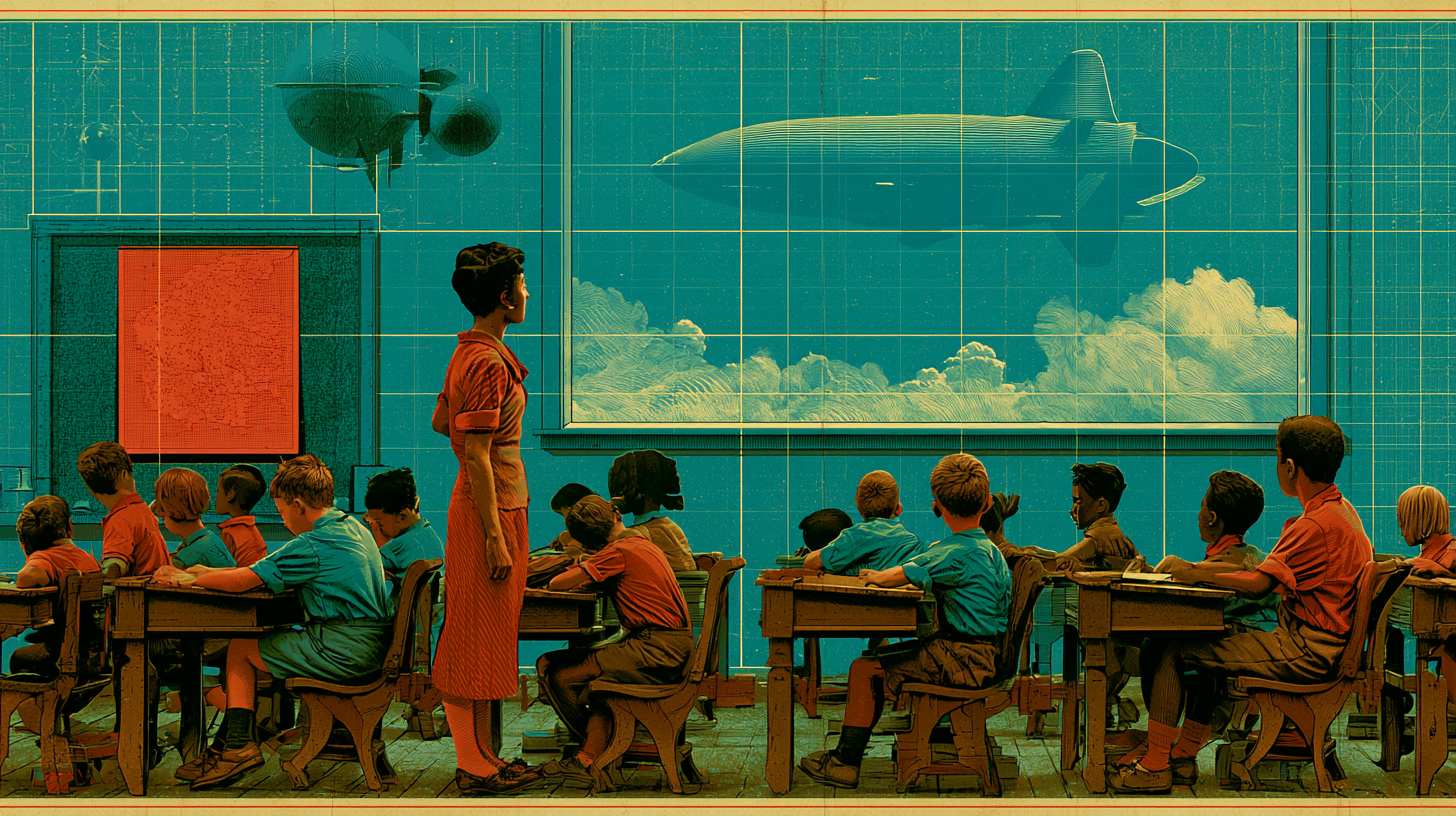
On the NAEP test, the one assessment American students have taken since 1970, scores at the end of high school have barely moved. Seventeen-year-olds, the finished product of thirteen years of schooling, have made no notable progress in the fifty-six years since.3 And yet, year after year, we keep teaching with the same failed approach, and profess surprise when nothing changes.
A child learns inside relationships, or not at all. This is not soft, and it is not optional. Zaretta Hammond, Lisa Delpit, and Chris Emdin have all shown the same thing from different angles: the brain runs a constant scan for threat, and one that reads a room as unsafe will not cross into the deep, effortful thinking school keeps asking for.4 The threat is rarely loud. It is the steady, low signal that you do not belong here, and it drains the very attention and working memory that thinking depends on. Psychological safety and belonging are a precondition for cognition, not a courtesy laid on top of it. And safety is not the same as warmth, or even kindness. It is being seen and valued for who you are, not in spite of it, a luxury this country has never handed out equally. When a child is told, in a thousand small corrections, that their language and their culture and their whole self belong outside the door, they are handed a false choice: be yourself, or be a student. Du Bois named what follows a double consciousness, the work of being two people at once. We still load that work almost entirely onto Black, brown, and immigrant children, then praise the ones who carry it best. That is not a relationship. It is survival. And no brain is built for deep thinking under threat, not theirs, not anyone's. The deficit was never in the child. It was in the design.
A young child's most serious work is play. Play is not the reward a child earns once the real work is done. For a young child, play is the real work. Peter Gray has assembled the evidence that free, child-directed play is the engine through which young humans build judgment, resilience, social fluency, and the capacity to govern themselves, the same way every other young mammal rehearses its way into adulthood.5 At that age the work is inseparable from the body. Running, climbing, building, learning by trial what is safe and what is not. Children are embodied, outdoor animals, and their first learning is physical long before it is abstract.
We built a model that keeps them seated, indoors, and still for most of their waking childhood. And when their bodies do what bodies are built to do, fidget, squirm, refuse to sit one more minute, too often we hand them a screen to quiet the impulse, until they go still and compliant in a plane that was never built to fly. Over the same half-century we spent stripping childhood of free play and filling it with adult-directed instruction, anxiety and depression among the young have risen sharply.6 Researchers argue hard about how much of that to lay at the feet of lost play versus social media versus everything else, but the line moves the wrong way no matter how you cut it. We did not remove something pleasant. We removed a developmental necessity and renamed the vacancy rigor.
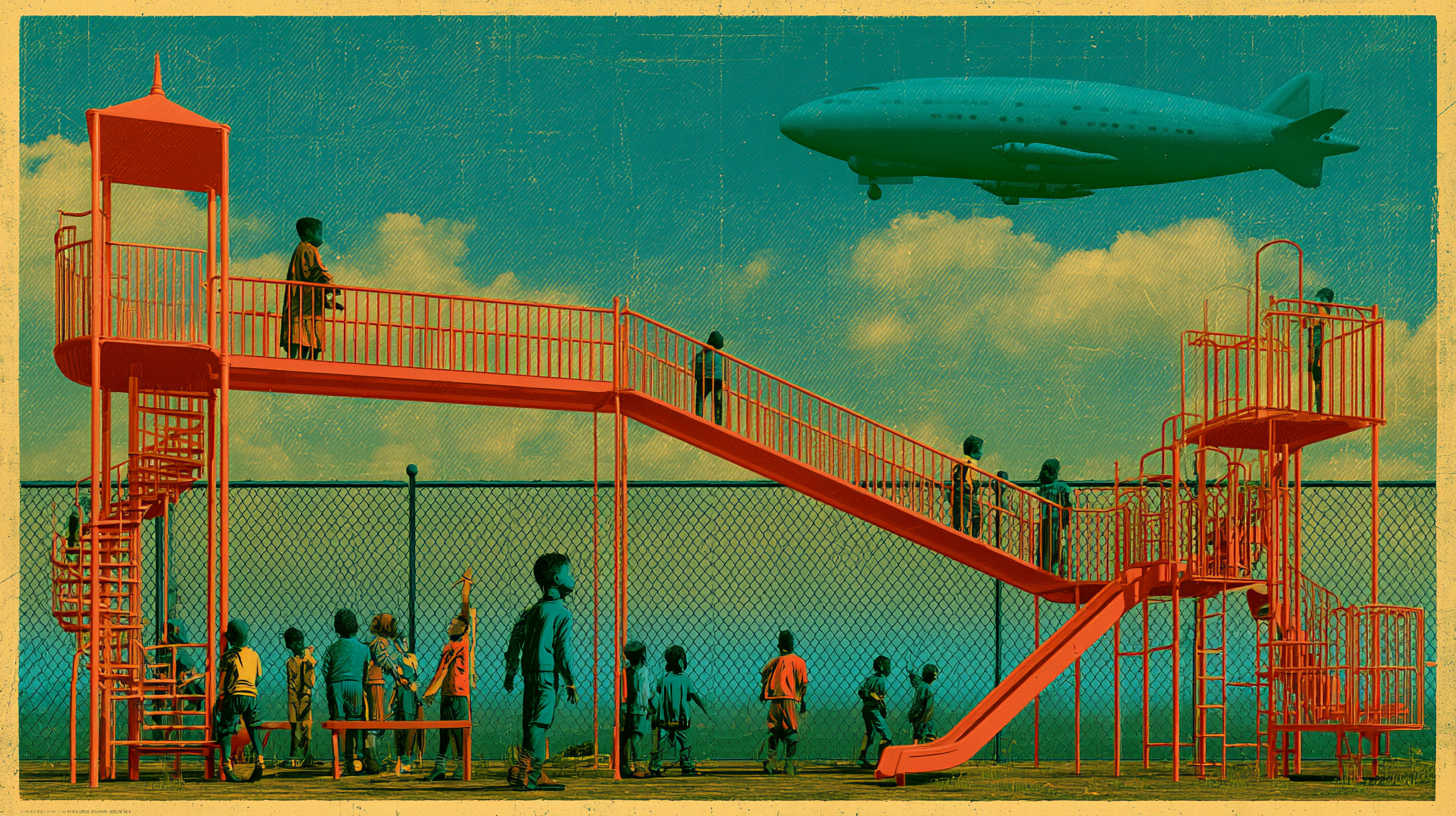
As a child grows, the work grows up with them. The drive that comes alive in free play does not fade with age. It matures. A teenager is no longer rehearsing the world through tag and make-believe. They are pulled toward the things that actually move human lives: justice, power, belonging, love, the urge to make something other people will use. But that's too messy. It can't be measured. It can't be done by everyone at once, at the same pace, in the same way. A factory simply can't let each thing it produces have agency over what it becomes. So we ask them to trade their ambition for ambivalence. Their curiosity for compliance. We tell them to hit pause on everything that feels natural about learning, and to trust us that it will pay off one day.
But that drive is not a distraction from learning. It is how learning works. A child learns most by doing real work that is theirs, work that matters to someone.7
This isn't "making the word problem relevant by mentioning basketball." It's getting out of the classroom to start a food pantry. It's fixing the roof on the shed that stores the gym equipment. It's making art, growing and cooking your own food, going down to the courthouse to fight the rent hike pushing your friends out of their homes. Authenticity is not a mask you wrap around your curriculum. Authenticity is the curriculum, and you can't manufacture it, mass-produce it, or standardize it.
This one does the most damage. The way we even think about learning is backwards. School treats it as rare and effortful, something that only counts when an adult planned for it and a test can measure it. But a child is learning all the time. Their brain is wired and rewired by everything they encounter, and that constant, unnoticed learning shapes how they make friends, what they care about, how they see themselves, the person they become.8 So a system that treats a child as a static, empty vessel, to be filled with standards and lessons in a fixed sequence, does not just misunderstand, at the most basic level, what a child is and how a brain learns. It quietly teaches the child to stop trusting themselves. A child doesn't fail to learn math. They learn to believe they are bad at math. They don't fail at school. They learn not to believe in themselves.
We do not manufacture children who cannot learn. By failing to teach them the way they actually learn, we manufacture children who distrust their own minds, and who wait for someone else to tell them what they are worth.
Hold onto that. It comes back.
These are not competing theories. They are one design.
There is no class ready for the same thing on the same day, and there never was. Let each child move through what they are ready for, the day they are ready for it.
Nothing clicks until the knowledge beneath it is already in place, and the new idea arrives in a form that means something to the child.
No brain crosses into deep, effortful thinking while it reads the room as unsafe. Belonging is a precondition for cognition, not a courtesy laid on top of it.
Their interests, their language, their culture, the knowledge their family and community carry. Treat that as ground to build on, not a deficit to fix.
For a young child, play is not the reward earned once the real work is done. It is the real work, the engine of judgment, resilience, and self-government.
Children are embodied, outdoor animals, and their first learning is physical long before it is abstract.
As a child grows, the drive matures into a pull toward work that matters to someone. Authenticity is not a mask you wrap around the curriculum. It is the curriculum.
A child is learning every minute, wired and rewired by everything they meet. Build the whole thing to grow that, not to teach them to distrust their own mind and wait to be told what they are worth.
That is not a wishlist. It is the blueprint. We have had it for a century, and built children the opposite anyway. So how did we get here?
A century of triage
Because it was never built to do anything else. It was built to be cheap.
We did not choose the factory model because we believed it would help children learn. We backed into it at the turn of the twentieth century, because it was the cheapest way to take millions of immigrant children pouring into industrializing cities and turn them, fast and at scale, into the punctual, orderly workforce that economy wanted. We don't have to infer this. The men who built the system wrote it down. Ellwood Cubberley, the first dean of Stanford's school of education, whose textbooks trained a generation of American superintendents, described the task without flinching:9
"Our schools are, in a sense, factories in which the raw products (children) are to be shaped and fashioned into products to meet the various demands of life."
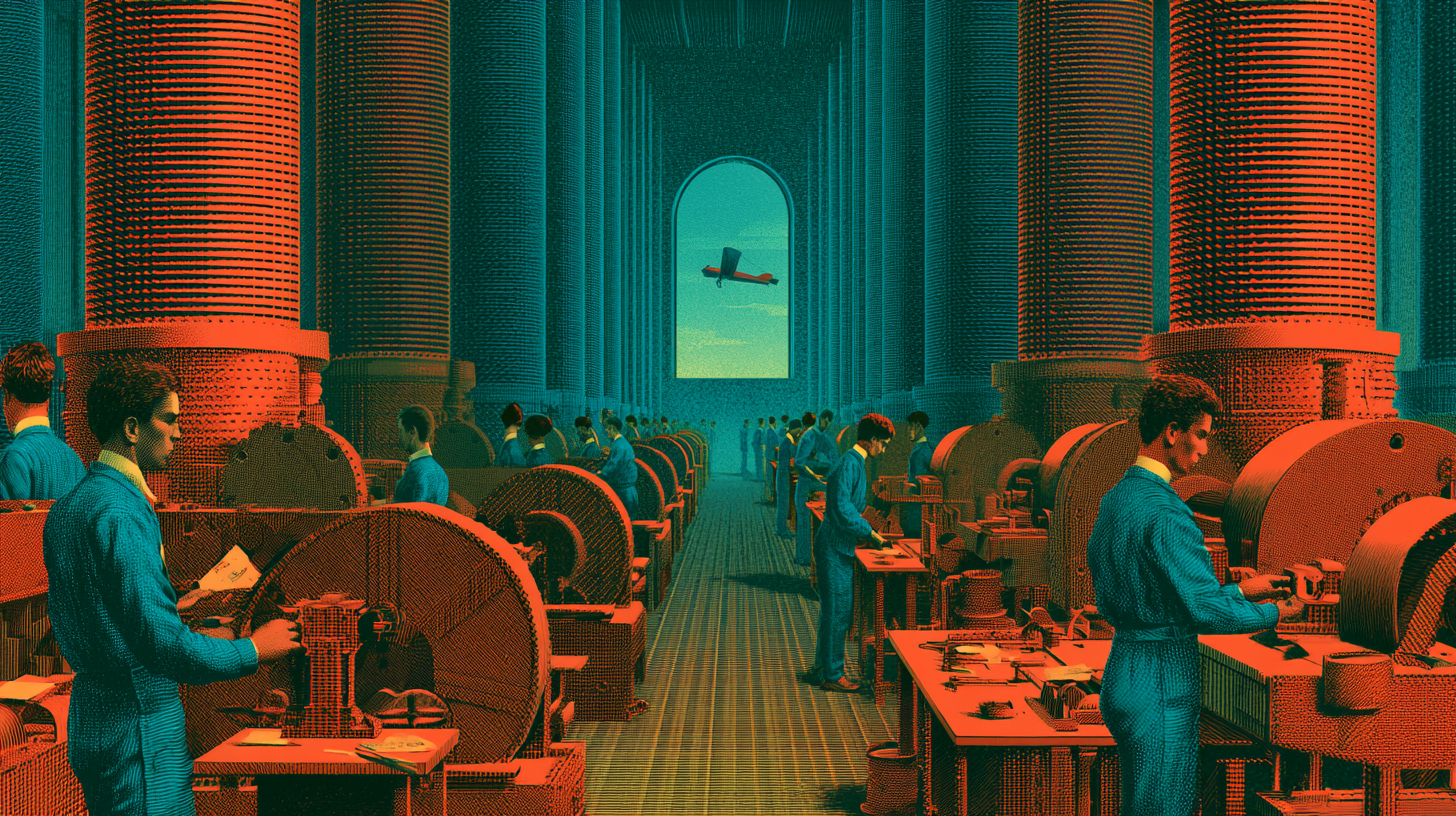
That is the base the whole enterprise was built on, and we have been trying to season our way out of it ever since. It is a stew started from a cheap, spoiled cut of meat. Every few years we throw in another spice, a new standard, a new test, a new accountability regime, a new app, hoping to fix the flavor without touching the rot at the bottom of the pot. It never works, because the problem was never the seasoning.
So now we chop the day into fixed blocks and move to the next one when the bell rings, whether or not any learning happened inside it. We fund schools just enough to keep the system running, never enough to actually serve children. And when more money does come, it goes to more of what is already failing: more test prep, more remediation, more learning apps, all of it paid for out of recess, art, and human connection. That is the hidden tax, and the flat scores are the least of it. The deeper loss, the attention, the appetite for a hard book, the agency and discovery of passion, is the kind no test was ever built to count. The failure is the part you can see. The damage is the part you can't.
So why haven't we changed it?
Resignation, not conviction
I have spent my whole career in education, as a teacher, a principal, a chief academic officer, a founder. The facts above are well known in all the systems I've worked in. The system's sharpest critics are not outsiders throwing rocks. They are the people inside it.
Not because the people inside are foolish or cruel. Because almost none of them believe they have the power to change it.
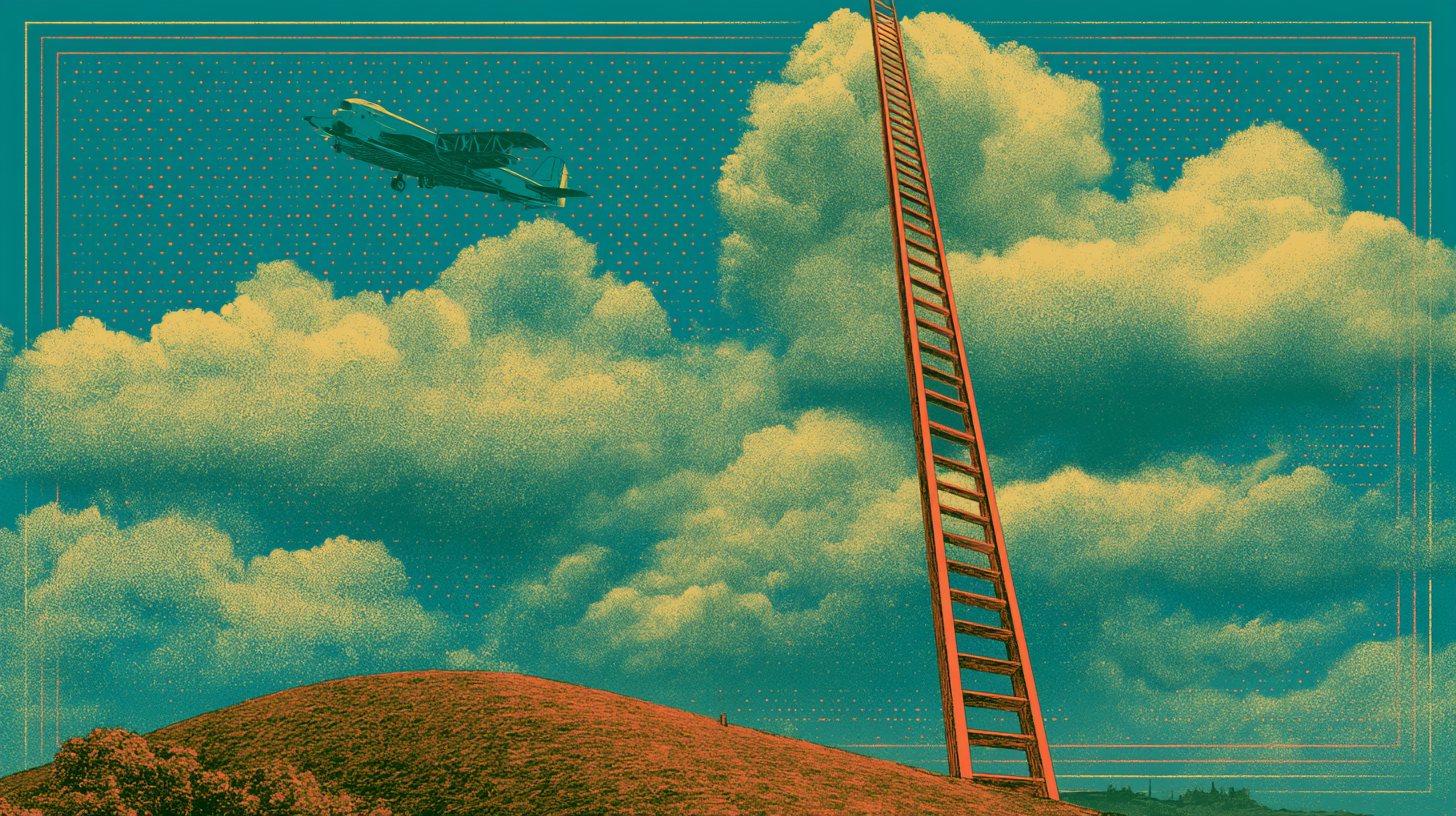
Ask a teacher why they still run a scope and sequence they know won't reach most of the kids in front of them, and they'll tell you the principal requires it. Ask the principal, and it's the district. Ask the district, and it's the school board. Ask the board, and it's the lawmakers. Ask the lawmakers, and it's the budget, the mandate, the last election. Everyone is carrying out an order from someone one rung up. And when you finally climb to the top of the ladder, there is no one there who chose this.
This is the quiet engine that keeps a broken model running: not conviction, but resignation. A vast institution run by people, almost none of whom would design it this way, each certain that the authority to change it lives one rung up, until the ladder runs out and you find it was leaning against nothing.
Section one was a child learning that the safest thing to do with their own mind is to keep it to themselves, to wait for someone else to say what it is worth. The same resignation is forced upon the adults in education, one rung at a time. It does not just fail to teach children agency. It strips it from the adults too.
If the system is not breaking the cycle from within, the obvious hope is that reform will force it from outside. It hasn't, because reform has never aimed at the shape. Every time the federal government has acted on education in my lifetime, it reached for the same lever and turned it harder: Clinton's national standards, Bush's testing and sanctions, Obama's waivers and evaluations.10 Different parties, one instinct, never once asking whether the plane could fly, only bolting another gauge to the cockpit.
Political change is not on the horizon. Not from the right, which has decided public education is a front in the culture war rather than a public good. Not from the left, which takes schools for granted between elections and, when it finally acts, reinforces the very cage it claims to want to open. No president of my lifetime, of either party, has changed the shape of the thing, and I don't expect the next one to, whoever wins. That is not a reason for despair. It is a reason to stop waiting. If the redesign is going to happen, it will not be handed down. No one is at the top of the ladder. It's time to burn the ladder down and build something new from the ashes ourselves.
Reclaiming the money and the time
Picture a neighborhood a few years from now that decided to stop waiting.
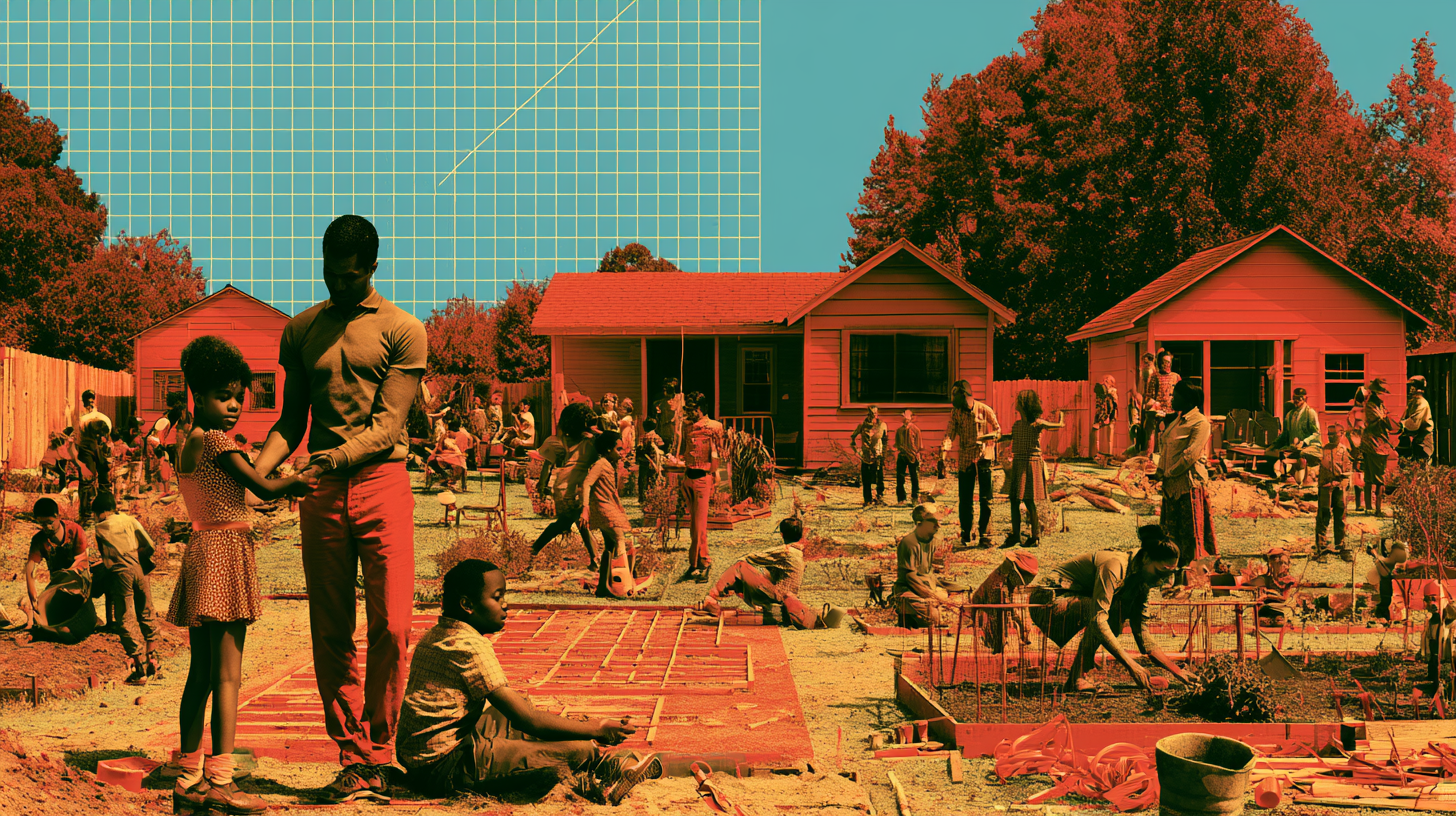
The school building is still standing, but walk inside and it is unrecognizable. The corridor of identical classrooms is gone. In its place, several different organizations have set up shop, renting the rooms cheaply and drawing on a pool of money that now funds the experiences each child needs, weighted hardest toward the children who have the least. What those organizations are depends entirely on where you're standing. In rural Colorado, one runs the mountains: camping, fishing, watershed science you do with your boots in the creek. In downtown Atlanta, the old gym is a dance company that doubles as a recording studio and a real small business. On the coast it's boatbuilding. In a farm town, a working farm. In a city, a theater, a bike co-op, a coding guild, a community kitchen. None of it is franchised. None of it was handed down from a state office. Each place grew the experiences its own people already knew how to give.
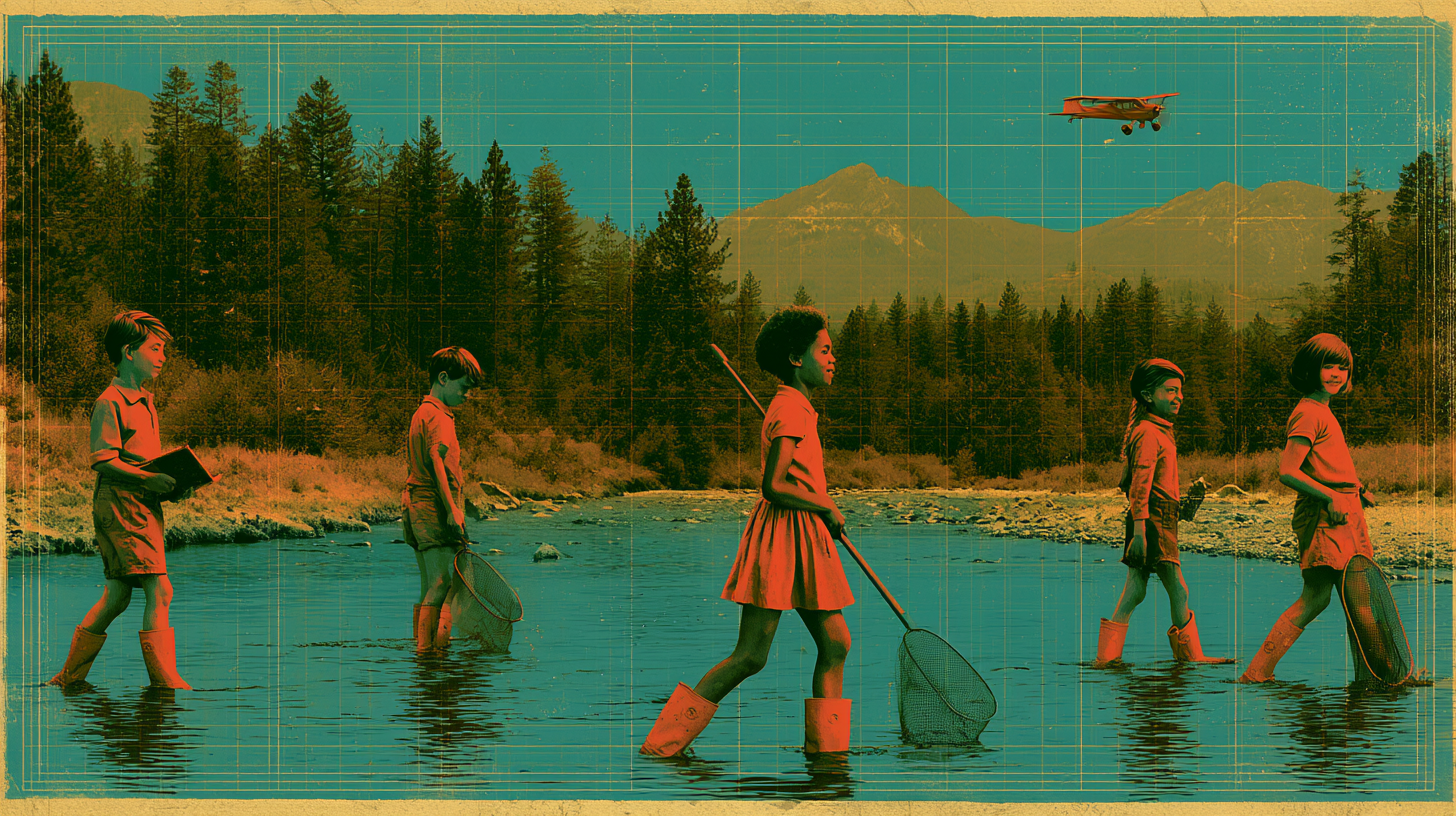
And the experiences answer what a place is actually carrying. A neighborhood living with a lot of childhood trauma builds out real therapy and mentoring. A neighborhood fighting obesity builds community gardens and brings in people who teach kids to grow and cook their own food. A neighborhood hollowed out by opioids and alcohol builds social services, after-school programs that run late, and internships in the clinics trying to hold the line.
This is the part the old system could never imagine: that a town might be funded to build its children's education out of itself.
A ten-year-old, call her Maya, gets dropped off at her school building. She does not go inside.
She climbs into the green van with six kayaks strapped to the roof, and it pulls out toward the lake.
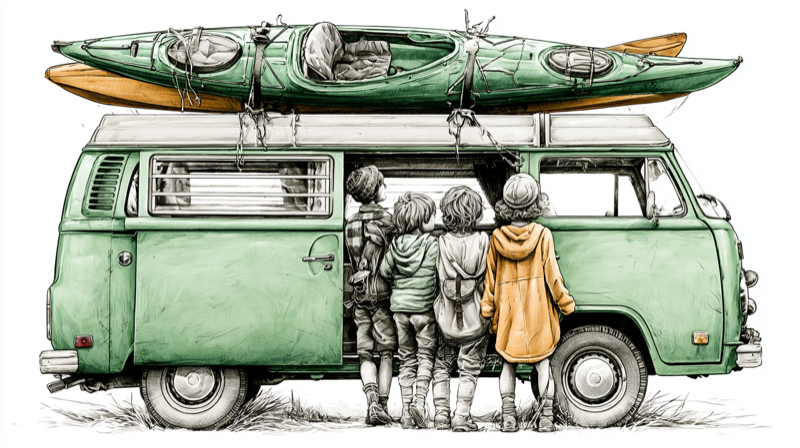
Her crew is ten kids and two adults who have had them since the fall. Last week, rangers at Lake Arkabutla, the flood-control reservoir an hour south of Memphis, taught them to paddle and to read the water.
The water is low this year. The drought has done something strange: small islands have surfaced in the middle of the lake, and things have started living on them.
The county wants to raise the water again. Maya's crew is documenting what is out there first, so that someone actually knows what the flood would drown.
So this morning they paddle out to one of the islands.
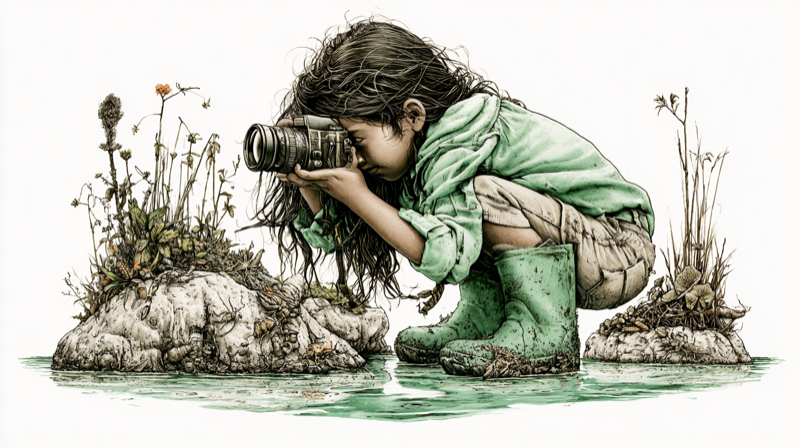
Maya photographs a beetle she can't name. She finds a line of tracks, maybe a squirrel, and cannot for the life of her work out how a squirrel got to the middle of a lake. She adds two new birds to the crew's list.
They kayak back, load the van, and drive to a college lab nearby, where a grad student shows them how to test the soil they bagged.
Back at the building, they upload the day and run the photos through an AI that helps them put names to what they found.
Then the hard part. The adults put a question on the board: is it right to manage a river this way, knowing that each time the water rises, whatever has started to live on those islands dies?
Maya has to pick a side and defend it, in a room with kids who land on the other one. She spent the morning on that island. It is not an abstract question to her anymore.
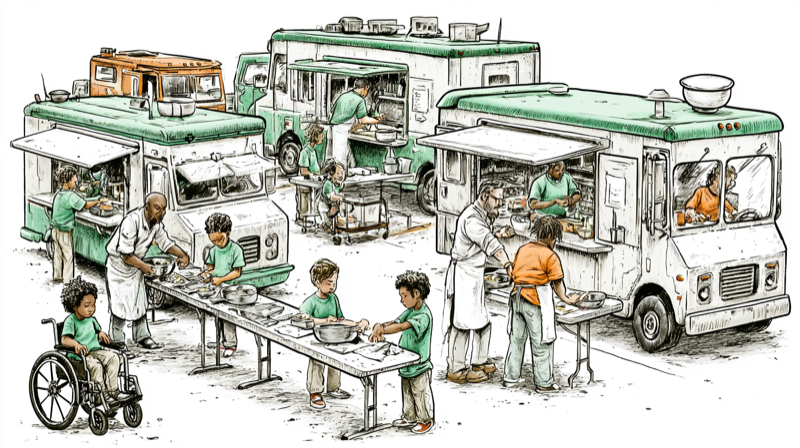
Lunch is several food trucks pulled up outside, run by restaurants from down the road. Maya and a handful of others work the line, prepping and cooking what the building eats before they sit down to eat it.
After that comes the quiet part of the day. Maya works through fractions with an AI math tutor that is patient in a way no adult with thirty children could be. It knows exactly which steps she has and hasn't gotten, keeps her at the edge where the work is hard but not yet impossible, and ties the ideas back to the island, the distances she paddled, the samples she counted. They talk it through. It is cheap enough now to give to every child, which it never was before.
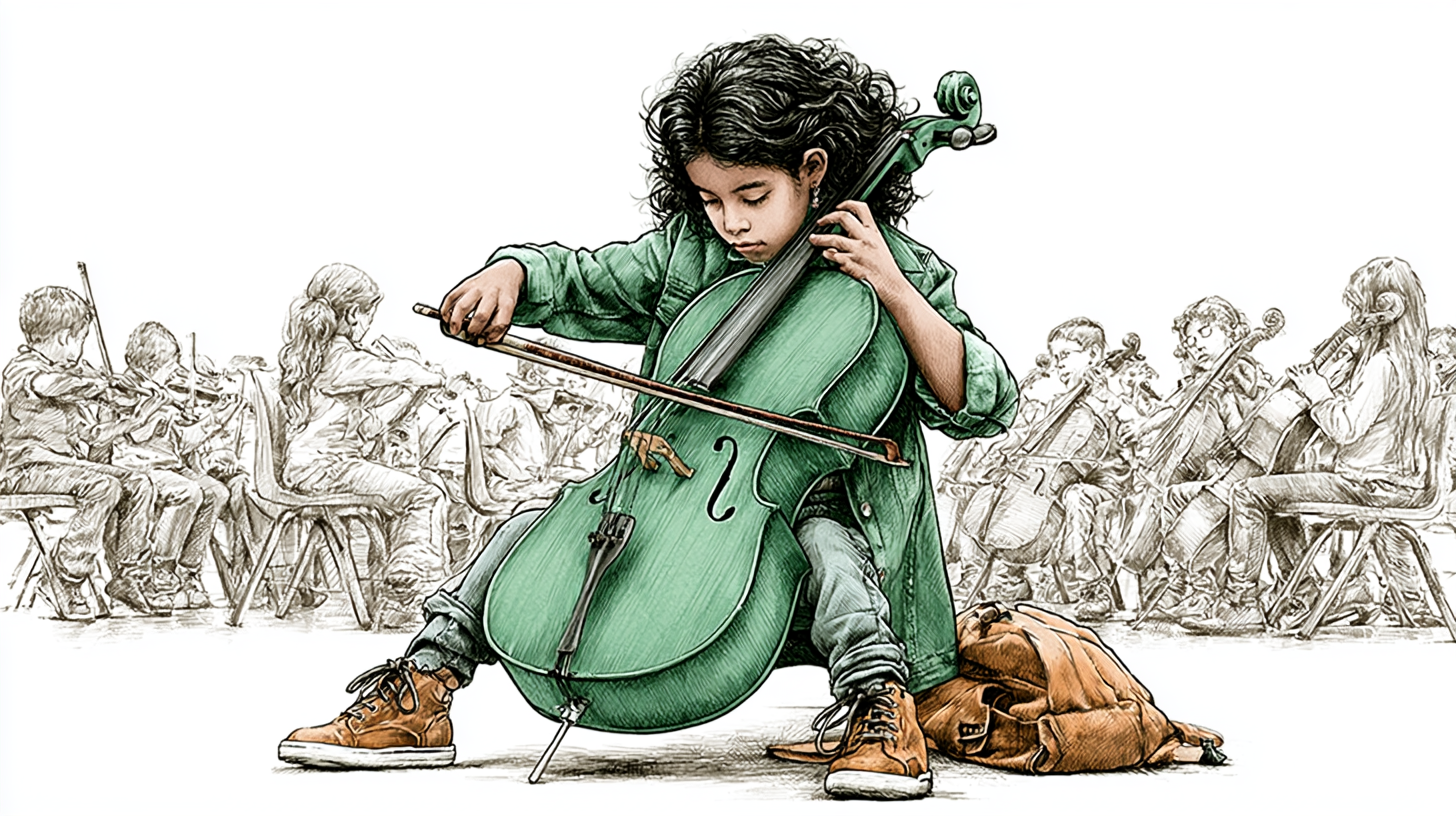
Then the gym, which becomes a music hall in the afternoon. Maya plays cello in the youth ensemble. They are working a Haydn piece and she is still learning to read the score, so she starts with a tutor that watches through a camera, fixes her bow hold, and walks her through a little theory. Then she plays it with the others, which is the part that matters.
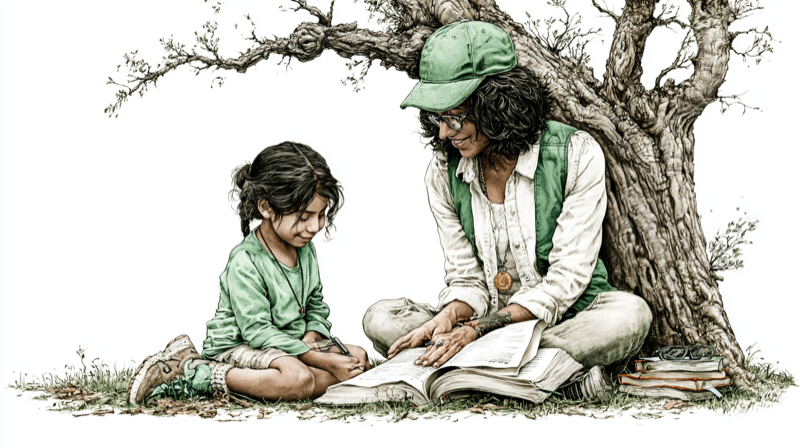
Late in the day comes the reading, the hard part. Maya is dyslexic, and the letters have never come easy. She sits with an AI tutor that drills the sounds with her, patient in a way no adult with thirty children could be, as many times as she needs and never once sighing. The goals it works toward were set by her reading specialist, a human she sees twice a week, who knows exactly how far she has come and what it has cost her to get here.
She finishes with her soccer team. She is learning the game, but her coach cares more about the thing the team keeps failing at, which is playing like a team at all.
Liberation, not indoctrination
Step back far enough and you notice that none of this is actually new. It only looks futuristic because the thing it replaces has been around so long we forgot it was an invention.
For nearly all of human history, children did not learn in age-sorted rows inside a purpose-built box, cut off from the life of the community around them. They learned embedded in that life: mentored, apprenticed, watched over by a web of adults who knew them, in mixed-age groups, doing real work that mattered to people they could see.11 The isolated classroom is not the timeless form of education. It is the recent aberration, barely older than the automobile, and we've mistaken its familiarity for permanence.
The village had exactly one thing it could never guarantee: that every child, regardless of which adults happened to surround them, would receive patient, expert, individual instruction, the most powerful intervention we have ever measured. Benjamin Bloom showed in 1984 that a child tutored one to one outperforms the same child taught in a class by an enormous margin, and no form of group instruction has ever closed the gap.12 The barrier was never pedagogy. It was arithmetic: a tutor for every child has always been too expensive. That was always the privilege of the wealthy. The tutor was the dividing line, the thing the rich could buy and the poor could not, generation after generation, which is a great deal of how the rich stayed rich. For the first time in the history of our species, we can imagine handing that one gift to every child at once. The single resource that always divided children could become the one that equalizes them.
Do not mistake my optimism for naiveté.
The same technology that could free the time and money to raise whole people could just as easily pipe a flat, surveilled, engagement-optimized curriculum into millions of passive children at industrial scale. Indoctrination, finally perfected. The naive bet is that the good version arrives on its own. It will not. The dark version is the default: it has the business model, and it is the one being built right now, by people optimizing for time-on-screen and calling it learning. The better one has to be built on purpose, against that current, by people who want something else for children. Two groups deserve a direct word.
To the builders. This part is mostly yours, and I mean it as an invitation. AI is a raw material, and the tools that would build the world above don't exist yet, which means you decide what they become. Build it for liberation: a tool that fades its own scaffolding as the child grows stronger, that measures itself by how fast the child stops needing it, that reports to the teacher instead of routing around them. Make transfer and independence the metric, never time on screen. Optimize for the child who outgrows it, not the one who can't put it down. The best version disappears into a childhood instead of eating it. Build that one.
To the educators, my own people. You've known all of this the whole time. You're the pilots who spent your careers flying the broken plane and getting blamed for the crashes. I understand the skepticism. You were promised that Blended Learning, then Personalized Learning, then Gamified Learning, then Adaptive Learning would each be the magic wand, and here we are, further from what school should be than we have ever been.
But AI is not one more item on that list. The genie is out of the bottle, and it is not going back in. It will reach every school and every classroom no matter what any of us think of it. You cannot vote it away or wait it out. The only choice left is who shapes what it becomes: the people who know children, or the people who never will. So take the seat. Most of the people building these tools have never spent a day in a classroom, and they need a vision to build toward. Picture the education you actually want, then email and call them and tell them exactly what you see. You'd be surprised how many write back, and how readily they'll build toward what you describe, because right now almost no one is telling them anything at all.
Will it be free? No. We will have to learn, as a country, how to fund this new way of raising children — which is a political question before it is an educational one. Will it be easy? No. It will take a whole new body of policy, and that policy has one job before any other: to make these experiences work for the children the old system failed worst — the students with disabilities, the ones carrying trauma, the ones with behavioral needs, the ones still learning the language. The money stays public and runs hardest toward the children with the least, or all we have done is rebuild the old injustice with shinier tools.
This will be hard. But my god, hard is the only thing education has been for fifty years, and we have been losing the whole time. So stop waiting for permission that is never coming. Dream. Then force it into being. There is a new power loose in the world, and for once it has not yet been gobbled up and monopolized and aimed at someone's bottom line. Point it at the most ambitious thing we can imagine for a child.
Metal can become a gun or a trumpet. Fire can raze a village or warm it. AI is the raw material of the century, and what gets made of it is up to us. The world has plenty of cynics; what it needs is dreamers. So dream, and dream big.
References
- 1.Lev Vygotsky, Mind in Society (Harvard University Press, 1978). The zone of proximal development is the gap between what a learner can do alone and what they can do with help. ↩
- 2.Daniel Willingham, Why Don't Students Like School? (Jossey-Bass, 2009). Critical thinking depends on a base of domain knowledge held in long-term memory; you cannot reason well about what you do not already know. ↩
- 3.National Center for Education Statistics, NAEP Long-Term Trend Assessment. Reading and math scores for 17-year-olds in 2012 were statistically unchanged from the early-1970s baselines, and age 17 has not been assessed since. The recent declines appear in the younger cohorts (age 9 in 2022, age 13 in 2023), beginning before COVID and steepening after, with 13-year-old math falling to roughly 1990s levels. ↩
- 4.Zaretta Hammond, Culturally Responsive Teaching and the Brain (Corwin, 2015); Lisa Delpit, Other People's Children: Cultural Conflict in the Classroom (The New Press, 1995); Christopher Emdin, For White Folks Who Teach in the Hood... and the Rest of Y'all Too (Beacon Press, 2016). The phrase "double consciousness" is W.E.B. Du Bois's, from The Souls of Black Folk (A.C. McClurg, 1903). ↩
- 5.Peter Gray, Free to Learn (Basic Books, 2013). ↩
- 6.Peter Gray, David Lancy, and David Bjorklund, "Decline in Independent Activity as a Cause of Decline in Children's Mental Well-being," The Journal of Pediatrics 260 (2023): 113352. See also CDC, Youth Risk Behavior Survey, 2011–2021: the share of high-school students reporting persistent sadness or hopelessness rose from 28% to 42%. ↩
- 7.Seymour Papert, Mindstorms: Children, Computers, and Powerful Ideas (Basic Books, 1980), the founding statement of constructionism. ↩
- 8.Frank Smith, The Book of Learning and Forgetting (Teachers College Press, 1998). ↩
- 9.Ellwood Cubberley, Public School Administration (Houghton Mifflin, 1916), 338. ↩
- 10.Goals 2000: Educate America Act (1994); No Child Left Behind (2001); Race to the Top (2009); and the ESEA flexibility waivers offered from 2011. ↩
- 11.David Lancy, The Anthropology of Childhood, 2nd ed. (Cambridge University Press, 2015); see also Gray, Free to Learn, on learning in mixed-age groups embedded in community life. ↩
- 12.Benjamin Bloom, "The 2 Sigma Problem: The Search for Methods of Group Instruction as Effective as One-to-One Tutoring," Educational Researcher 13, no. 6 (1984): 4–16. The same work is the research backbone for mastery learning: hold the standard constant and let time vary. ↩