 Ryan York
Seven Bets
AI will bring abundance. A few will capture it. Everyone else will pay the bill—unless we build something different.
Everyone is betting on how AI reshapes the world, whether they've noticed or not.
Those are all wagers on what the next ten years look like. The only choice is whether you place them deliberately. Most people never write their bets down, so they never see how their own assumptions are driving their decisions.
These are mine.
Seven predictions about where AI takes software, work, and the physical world, and why each one matters. They aren't guesses about flying cars or curing death. Predictions like that are entertainment. Whether they land in 2050 or never, nothing about your Monday changes. These are bets on the next ten years, and every one of them has already started.
They're also costing me something. They decide what I build, what I study, and who I spend my time with.
I'm an optimist, but not the passive kind. I grew up organizing in nonprofits and progressive campaigns. My version of hope is the kind you have to work hard as hell for.
I want the version of this future that works for everyone, not just the people already positioned to win. The future isn't destined for abundance or destruction. It gets built by the people who plan for it.
What I'm treating as settled
Before the bets, four things I consider ground truth. Not everyone accepts them yet, but I'm no longer arguing about them.
- AI is going to write most of the code. People will still decide what software should do, but machines will do most of the actual building.
- It is getting much easier to make software. It is not getting easier to know what people actually need. The hard part is shifting from can we build this? to is this worth building at all?
- For a lot of our biggest problems, we already know the answer. We just can't get the work done. We know how to build housing, clean water systems, power plants, roads, and schools. The hard part is permits, money, coordination, politics, and getting dozens of people and institutions to move together.
- We are starting from a deeply unequal world, and inequality does not undo itself. Wealth, power, and access to resources are already distributed extraordinarily unevenly. Some comes from geography and natural resources; much of it is the accumulated result of millennia of slavery, caste systems, colonization, and exploitation. Those forces concentrated wealth and power, and their effects compound long after the original systems change. Correcting that inequity requires an equal and opposite force: deliberate, sustained collective action to build systems that intentionally direct prosperity and abundance toward the people and places from which they have historically been withheld.

Software will be grown, not built
For most of software history, a product changed when a person decided to change it.
Someone noticed a problem, wrote a ticket, designed the fix, built it, tested it, and shipped it. Then the product sat there until people did the whole thing again.
AI is making that cycle dramatically faster, but we are still mostly using it to accelerate the same model. Humans decide what the product should become. AI helps us get there faster.
My bet is that this changes.
Software stops waiting for us.
A product continuously watches how it is being used and how the world around it is changing. It notices where people struggle, writes and deploys its own updates, measures what happens, keeps what works, and removes what doesn't. It's like a plant, constantly growing and adapting to the world around it.
People still set the boundaries: what the product can change, how it judges success, and most importantly, what it is trying to become.
Once software can change itself, what it optimizes for is no longer just a product decision. It becomes a rule governing people's lives.
We've already seen a primitive version of this. Social media learned that engagement was measurable, so the systems got very good at producing engagement. Nobody had to explicitly decide, make teenagers more anxious or make politics more deranged. The loop simply kept pushing toward the number it had been given.
And that was a feed.
Now put that loop inside the system your kid's school runs on. Or the software screening your job application. Or the tool your doctor reads before walking into the room.
The technology to build that loop will come.
The hard part is not building a system that can evolve. It is deciding what it should grow toward and who gets to decide.

Everyone works like an entrepreneur, and employment starts carrying equity
For most of modern employment, the bargain was simple. A company figured out what needed to be done. It broke that work into roles. You took one of them, did the work, and got paid for your time.
That bargain depends on somebody being able to specify the work in advance. AI is eating that part first.
If a task has a knowable answer, a repeatable process, or a clear definition of done, it is becoming easier to hand to a machine. What remains for people is the work nobody knows how to assign.
Something is broken, but nobody knows why. A new market might exist. Costs are rising somewhere in the system. A technology appeared six months ago and nobody knows what it changes.
There is no ticket for that.
You have to notice it, decide whether it matters, form a theory, test something, read the result, and decide what to do next.
That is entrepreneurship.
Entrepreneurship becomes the default shape of human work.
Companies start looking less like a few executives making bets while everyone else executes them, and more like portfolios of people hunting for value.
One person finds a way to remove a million dollars of cost. Another discovers a customer nobody was selling to. Someone else finds a new business hiding inside the old one.
Then the old compensation model starts to strain. A salary pays you roughly the same whether the thing you discover is worth $20,000 or $20 million. That made sense when the company defined the problem and told you what success looked like. It makes less sense when you're asked to find the opportunity yourself.
If I'm expected to think like an owner, take risks like an owner, and create asymmetric upside like an owner, eventually I'm going to ask why I don't own any of it.
AI doesn't just change what people do at work. It breaks the bargain underneath employment.
Companies already say they want employees to "take ownership." Increasingly, they're going to have to mean it.
Equity, profit sharing, internal ventures, project ownership: the mechanism will vary. The point is that the economics start matching the work.
And if you run the company, the choice is pretty simple.
Give your best people room to find opportunities and a real stake in what they unlock.
Or teach them how to think like founders until they realize they don't need you.
The companies that figure this out will keep their entrepreneurs inside the building. The ones that don't will watch them walk out the door.

Managing people gives way to managing machines
Bet B says the valuable human work becomes more entrepreneurial. Bet C is how that work gets leverage.
The Cynefin framework makes the split clear: simple and complicated work have knowable answers; complex and chaotic work do not. AI is rapidly absorbing the first two. That leaves people the harder half: living in the complex and chaotic while supervising machines that handle the rest.
That is why I think almost everyone becomes a manager. Not necessarily a manager of people. A manager of AI agents.
You will assign work, give context, set boundaries, review output, catch mistakes, and decide when an agent is ready to operate with less supervision. Some agents will be reliable. Some will need constant correction. Some will be good at one narrow thing and terrible outside it.
That is management.
Span of control used to mean how many people report to you? Now it means:
How many agents can you direct, evaluate, and remain responsible for at once?
A few people, managing dozens of capable agents, will be able to produce what once required a department or even an entire company.
Robots eventually do the same thing to physical work. They just arrive on a different clock. That's Bet E.
Living in the complex while managing the complicated has always been the leadership playbook. The bet is that it becomes everyone's.
Being good at your job used to mean getting better at doing the work. Increasingly, it will mean directing agents that do more of that work than you do yourself while you navigate uncertainty toward a goal.
Almost nobody has been trained for that. Our schools and workplaces have spent decades producing complicated-domain workers: people who know the answer, or know how to find it. That is exactly the domain machines are absorbing fastest.
So the career skill to build is management, not prompting: using judgment and taste to decide what matters, navigating problems without clear answers, delegating the knowable work, and knowing when reality is telling you the system is wrong.
Your leverage stops coming from how much work you can do. It comes from seeing what needs to be done before anyone else does, making good decisions when the answer isn't clear, and directing agents to turn those decisions into reality.

Software becomes a commodity and memory becomes the moat
Software used to be valuable partly because it was hard to build. AI is changing that fast: code is getting cheaper, features are easier to reproduce, and being well built is no longer enough to make a product defensible.
So the moat moves.
To memory. The long-term kind, that outlives any single conversation.
An agent you meet today can be brilliant and still feel like someone you just met. It does not really know what you care about, how you make decisions, which people matter to you, what you tried two years ago, or which old ideas are suddenly relevant again.
Now imagine using that same agent for ten years.
It remembers the people you've worked with, the decisions you've made, the patterns you've missed, the arguments that changed your mind, the projects that failed, and why. More importantly, it knows when to bring those memories back.
You mention a new deal and it remembers someone you met two years ago who could unlock it. You are struggling with a decision and it says, You were in almost this exact situation four years ago. Here's what happened.
You didn't search for those memories. The system knew when they mattered.
At that point, it stops feeling like a brilliant stranger. It starts feeling like a mentor who has known you your whole life.
The most important AI breakthrough of the next ten years won't be a smarter model. It will be reliable long-term memory storage and retrieval.
Human intelligence is powerful partly because our lives compound.
We do not approach every problem from zero. Old experiences shape how we see new ones, and some of our best insights come from connections we were not consciously looking for.
AI cannot do that today.
Good memory does not mean storage. Good memory involves selection, association, retrieval, and forgetting. That's a very different problem from giving a system more information, and without it, more memory just creates more junk.
Get this right, and AI stops resetting every time you start a conversation. It grows with you. It knows you. You trust it beyond its ability to perform a task; you trust it to help you make the most important decisions in your life.
That's the new frontier.
Digital speed tells you nothing about physical speed
Software got fast because failure is cheap. You can try a thousand approaches before lunch, keep the one that works, and throw the rest away. AI makes that loop even faster.
Atoms don't work like that.
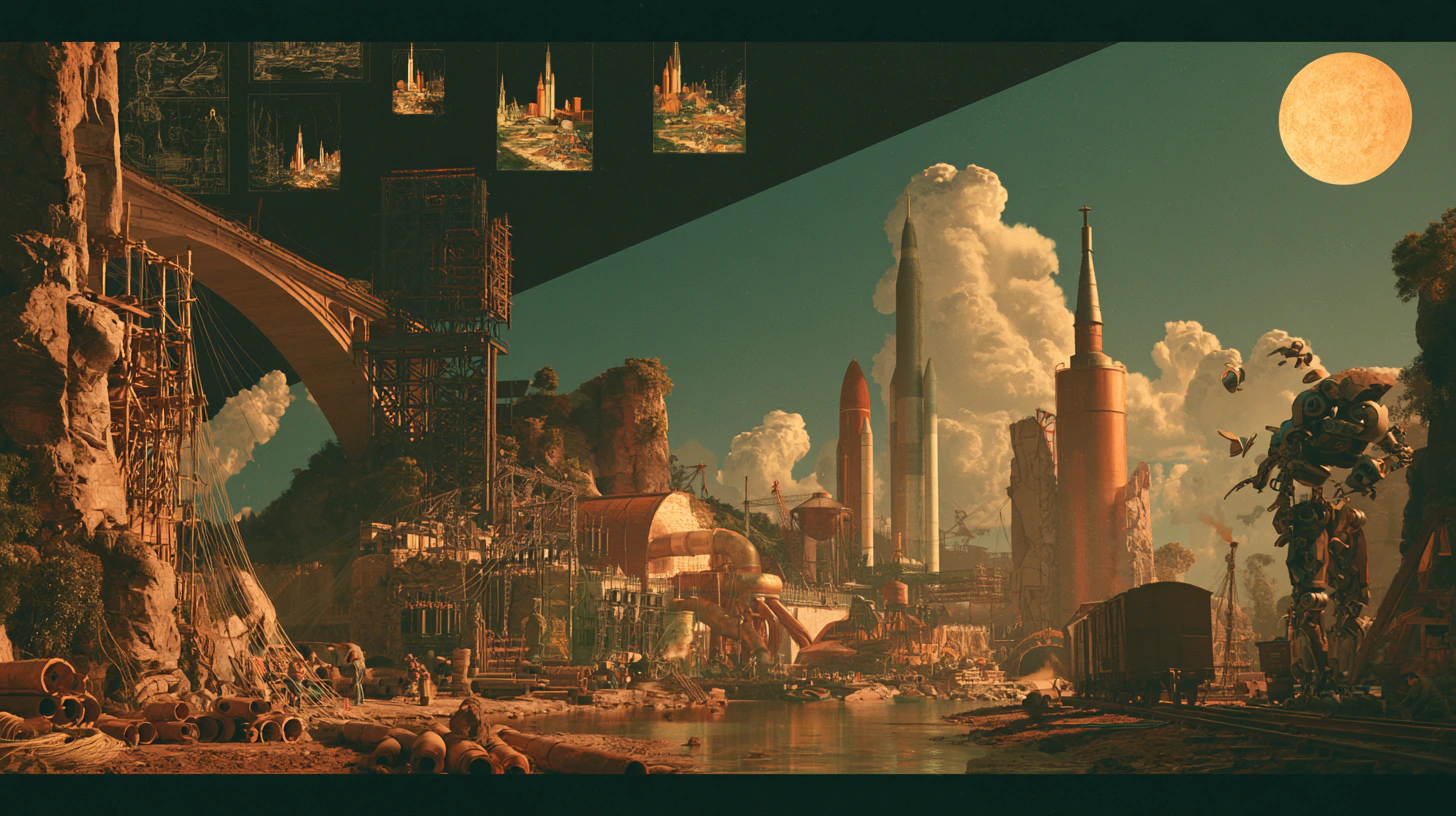
A bad software experiment costs minutes. A bad robotics experiment can break hardware. A materials candidate still has to survive a real furnace. A new power line still has to be permitted, financed, built, and connected. Every self-driving mile is still an actual mile.
Bits can fail for free.
Atoms cannot.
The physical world is not where human work disappears. It is where we are going to need vastly more of it.
AI can accelerate design, diagnosis, discovery, and planning. But turning those answers into roads, housing, factories, water systems, robots, and power infrastructure remains complex human work.
In a world worried about AI eliminating jobs, this is the other side of the story: we need far more people capable of turning intelligence into physical reality.
The digital world can invent the future quickly.
We need people who know how to get it built.
Energy is the defining buildout of the decade
For most of the last fifteen years, electricity was boring. Demand grew slowly, especially in the US, and utilities planned around incremental growth.
That era is over.
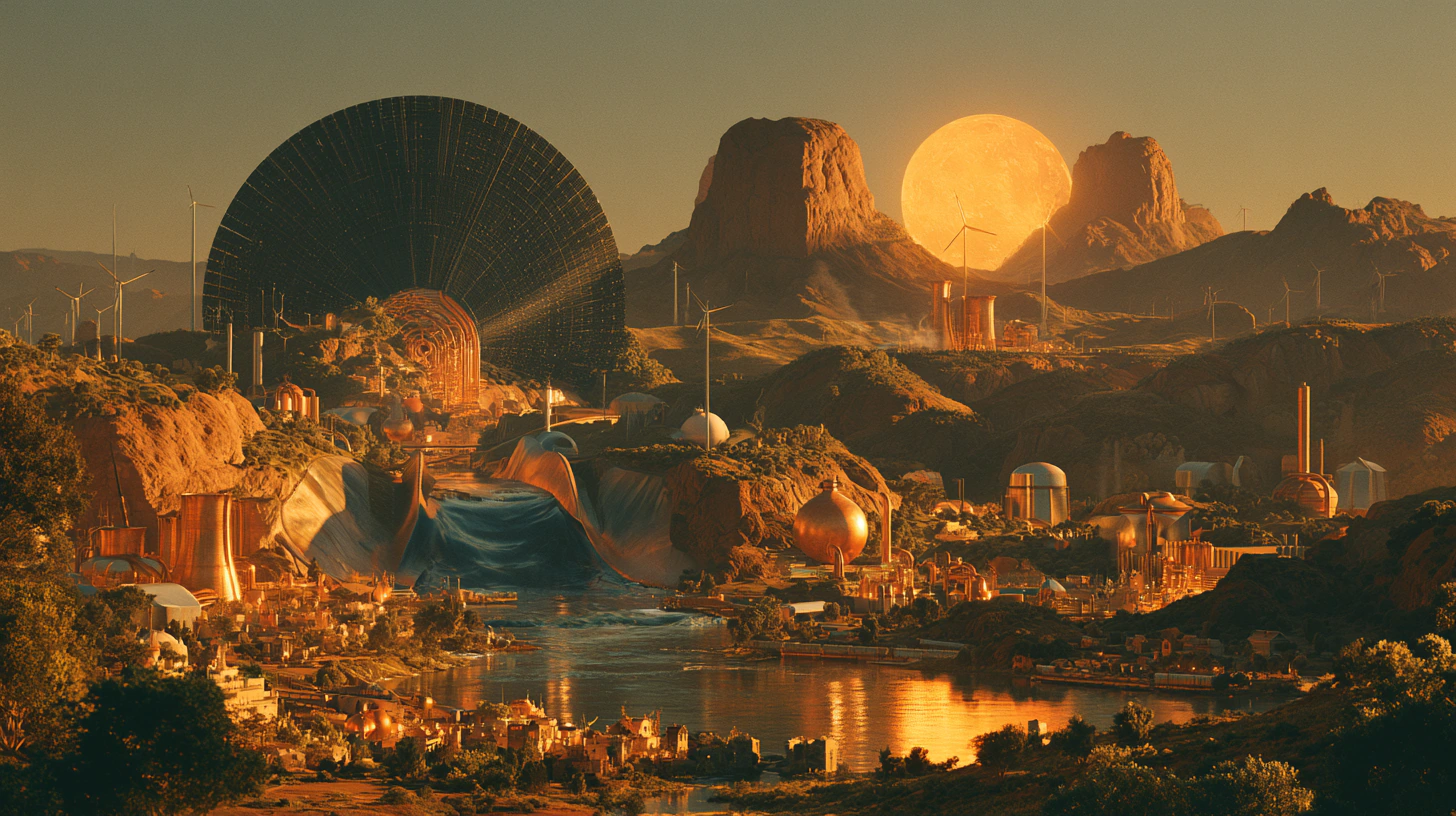
AI, electrification, industrial growth, cooling, and rising incomes are pushing electricity demand up at once. We will build enormous amounts of new generation: solar, wind, nuclear, gas.
Building new generation, especially clean generation, is still hard. But the bottleneck is moving downstream.
The constraint is increasingly the physical system that gets electricity where it needs to go.
Transmission lines. Substations. Transformers. Storage. Interconnection. Local distribution. Permitting. Construction.
This may become one of the largest physical construction projects of our lifetimes.
The next ten years will represent an unfathomable energy industry boom.
Energy is the biggest victim of Bet E: you cannot prompt a transmission line into existence. Someone has to finance it, permit it, engineer it, manufacture the equipment, negotiate the land, train the crews, and put steel in the ground.
We are short power, and shorter still on the capacity to build the system around it.
How fast we build the shared system decides who ends up paying for it.
When the grid cannot move fast enough, customers with money route around it. Data centers build their own generation. Wealthy households add solar and batteries. Industrial customers build microgrids rather than wait years for an interconnection.
For each of them, that may be the rational choice. But the shared grid does not become free when they leave. Its fixed costs are simply spread across fewer customers: the apartment renter, the small business, the rural town, everyone who cannot afford to build a private energy system.
That is the equity problem hiding inside the energy boom.
A grid that connects new load in months instead of years is a grid nobody needs to route around.
So our collective capacity to build becomes the equity lever. We need inventors, materials scientists, electrical and chemical engineers, manufacturers, project developers, electricians, lineworkers, substation technicians, builders, regulators, lawmakers, and policymakers working in concert, and a whole lot more of each. The faster that system can deliver shared infrastructure, the less incentive wealthy customers have to route around it and leave everyone else paying the bill.
An energy-abundant future where the wealthy get cheap private power while everyone else inherits an increasingly expensive grid is still abundance.
It just isn't shared abundance.

Abundance arrives for the wealthy first, and the bill lands on everyone else
There is a version of the next ten years that is extraordinary.
Intelligence becomes abundant. Energy becomes cheaper. Machines expand what people can accomplish. We learn faster, build faster, cure more, waste less.
I believe that version is possible. I do not believe it arrives evenly without an enormous effort to make it so.
New abundance almost always reaches the people with money, infrastructure, and power first. They get the solar panels, the batteries, the AI assistants, the personalized medicine, the schools and companies capable of adapting immediately.
And maybe that would be fine if everyone else simply got the same things a few years later.
That is not what I am worried about.
I am worried that the wealthy get the abundance and everyone else gets the bill.
A wealthy family buys an education combining expert teachers with personalized AI; an underfunded school is handed a chatbot and told it can manage with fewer teachers. A company captures the productivity gains from automation; the displaced worker is told that society is getting richer. The countries that contributed least to industrial emissions pay for their hardest consequences.
The benefits are captured privately.
The costs are absorbed collectively.
That is not a technological inevitability. It is a political choice.
We know because people have changed that distribution before. HIV treatment once cost about $14,000 a year. Today, in much of sub-Saharan Africa, it can cost under $100.
That did not happen because the market grew more generous. It took four decades and millions of people: activists, scientists, manufacturers, health workers, public officials, funders, and organizers around the world. Many dedicated their lives to the fight; some died before the treatments they demanded reached them. Activists organized across borders, generic manufacturers challenged patents and pricing, governments changed the rules, and new institutions financed and delivered treatment at scale.
Millions gained access because people organized until institutions changed and the rules were rewritten.
Equitable distribution has to be fought for and built.
The same will be true of AI, but on a generation-defining scale.
Intelligence may become nearly free. The things that turn intelligence into a better life will not.
A model can design a power grid, diagnose an illness, or explain how to purify water. It cannot cross the distance between knowing what to do and having the capital, infrastructure, institutions, and political power to do it.
A model can cross an ocean instantly. A power grid cannot.
Neither can a hospital, a road, a water system, a factory, a school, or a home. They have to be built in particular places, by particular people. Where they get built, whom they serve, and who benefits from them are decisions made by institutions with power.
And concentrated power rarely volunteers to dilute itself.
The people promising a world where money and jobs stop mattering already live remarkably close to one. They are describing their own lives and calling it everyone's future.
This is the bet underneath all the others.
The first six bets describe an extraordinary expansion of human capability.
Software that continuously improves. Agents that multiply what one person can accomplish. Memory that compounds over a lifetime. Cheaper intelligence applied to the physical world. An energy system capable of powering it all.
But none of that answers the most important question:
Who gets it?
The same systems that could give billions of people more power to build, create, and solve problems could instead concentrate that power inside a small number of companies and individuals.
For many people, the abundance may never arrive. They may lose a job, watch their child's school fall further behind, or pay more to maintain an energy system others can afford to leave. They absorb the disruption while someone else captures the value.
That is why equity cannot begin with redistribution after the fact. It has to shape what gets built, who owns it, and who shares in the value from the beginning.
This seventh bet is the test the other six have to pass.
Do these technologies simply produce more?
Or do we use the power they create to build abundance that meaningfully corrects the inequities accumulated over millennia?
This is not merely an intellectual question.
It is a moral one.
Because if we get everything else right, but a small group owns the abundance while everyone else absorbs the disruption required to create it, then we did not succeed.
We just built a more technologically impressive version of the same world.
That is the future I am betting against.
But betting against it is not enough.
We have to build the alternative, starting today.
These are my bets. What are yours?
One post per bet is coming. If you think one of these is wrong, tell me why.